Is Lima Worth Seeing? Here's What The Guides Miss
Is Lima worth seeing?
Lima is absolutely worth seeing if you care about food, colonial history, dramatic Pacific views, and neighborhoods with real personality; it is less compelling if you want a compact, easily walkable city built around one single postcard landmark. For most travelers, Lima works best as a 2- to 4-night stop that adds depth to a Peru trip rather than a place to rush through or skip entirely.
Why Lima stands out
Historic center attractions give Lima more substance than many first-time visitors expect. The city's Plaza de Armas dates to 1535, when Francisco Pizarro founded Lima, and the surrounding architecture still anchors the city's colonial story. That matters because Lima is not just a gateway; it is a capital with layers of imperial, republican, and modern history visible in a relatively small area.

Food scene is the strongest reason to visit. Lima is widely regarded as one of South America's culinary capitals, with everything from simple ceviche counters to high-end tasting menus that draw international attention. If your trip priorities include memorable meals, Lima can easily become one of the most rewarding food cities in the region.
What is actually worth seeing
Plaza de Armas, the Lima Cathedral, and the Government Palace form the city's most important historic core, and they are the best starting point for a first visit. The nearby San Francisco Church and its catacombs add a more atmospheric, slightly eerie layer of history that many travelers remember long after the trip ends.
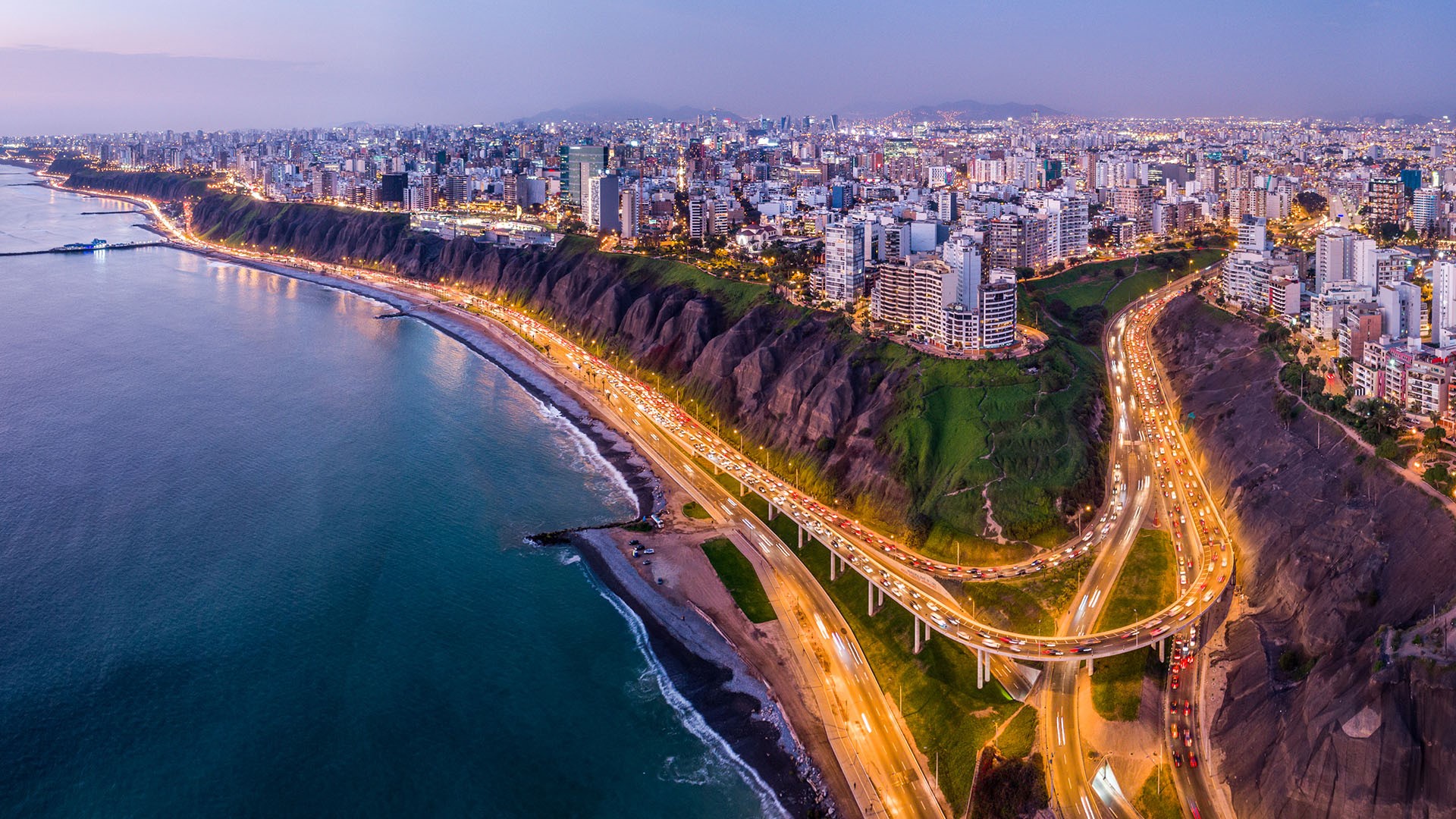
Miraflores is the neighborhood that most clearly explains why Lima appeals to leisure travelers. The Malecón gives you cliffside Pacific views, parks, and long walking paths, while nearby cafés, shops, and restaurants make the district easy to enjoy without needing a rigid itinerary. Barranco adds a more artistic, bohemian counterpoint with street art, galleries, and a more relaxed nightlife feel.
Huaca Pucllana is especially valuable because it reminds visitors that Lima is not only colonial and modern, but also deeply pre-Columbian. Seeing an adobe pyramid in the middle of the city is one of those contrasts that makes Lima feel distinct rather than interchangeable with other Latin American capitals.
Magic Water Circuit is more of a crowd-pleasing night outing than a cultural essential, but it is a genuinely fun add-on if you are traveling with family or want a lighter evening activity. It is the kind of attraction that helps balance a trip that otherwise leans heavily into history and dining.
Best reasons to go
- Food is the headline attraction, especially ceviche, seafood, and modern Peruvian restaurants.
- History is easy to access through plazas, churches, monasteries, and museums.
- Ocean views along the cliffs of Miraflores create a scenic urban experience.
- Neighborhood variety means you can experience colonial, modern, and artsy Lima in one trip.
- Convenience is high if Lima is your entry point to Peru or a layover stop before Cusco, Arequipa, or the coast.
When it may not be enough
Urban sprawl is the main reason some travelers feel underwhelmed. Lima is large, traffic can be slow, and the city does not always reward aimless wandering the way smaller destinations do. If you are expecting a single compact center packed with highlights you can cover in a few hours, Lima may feel more diffuse than dazzling.
Weather can also shape first impressions. Lima often has a gray coastal atmosphere outside the sunnier months, which can make the city feel less bright than the travel photos suggest. That does not make it bad to visit, but it does mean the experience depends heavily on what you choose to do.
Who will like it most
First-time Peru visitors should usually keep Lima on the itinerary because it sets context for the rest of the country. The city is especially worthwhile for travelers who enjoy architecture, museums, food tours, and neighborhood hopping rather than pure scenery.
Repeat travelers and slow travelers may like Lima even more, because the city's best qualities often become clearer with time. Once you move beyond the most obvious tourist stops, the restaurants, markets, cafés, and seaside walks reveal a city with more character than its reputation suggests.
Practical value
| Travel goal | How Lima fits | Worth it? |
|---|---|---|
| Food-focused trip | Excellent restaurants, ceviche, markets, and culinary tours | Yes |
| History-focused trip | Plazas, cathedrals, monasteries, catacombs, and colonial streets | Yes |
| Scenic coastal trip | Cliffside parks and Pacific Ocean viewpoints in Miraflores | Yes |
| Nature-only trip | City-heavy destination, not the main draw | Not ideal |
| Short layover | Good for a curated half-day or full-day plan | Often yes |
Best way to spend time
- Start in the Historic Centre with Plaza de Armas and the nearby cathedral area.
- Continue to San Francisco Church or a museum for deeper historical context.
- Head to Miraflores for a cliff walk, lunch, and ocean views.
- Finish in Barranco for art, coffee, dinner, or nightlife.
How many days make sense
Two days is enough for a first-time visitor to see the essential highlights without feeling rushed. Three days is better if you want to combine the historic center, coastal neighborhoods, and a serious food experience. Four or more days only makes sense if you want to slow down, eat widely, and explore beyond the standard tourist route.
"Lima rewards travelers who look beyond the first impression: the city's best experiences are spread across history, food, and neighborhoods rather than a single landmark."
Bottom line
Lima is worth seeing for most travelers, especially if you value great meals, real history, and a city that feels lived-in rather than staged. It is not the most obviously beautiful city in South America, but it is one of the most interesting and one of the easiest to justify as part of a Peru itinerary.
Expert answers to Is Lima Worth Seeing Heres What The Guides Miss queries
Is Lima worth visiting for a short trip?
Yes, a short trip works well if you focus on the Historic Centre, Miraflores, and Barranco, which cover the city's main appeal efficiently.
What is Lima best known for?
Lima is best known for its food scene, colonial history, and Pacific coastline, especially the cliffs and parks in Miraflores.
Is Lima safe for tourists?
Tourist areas are generally manageable with normal big-city caution, especially in well-trafficked districts and during daytime sightseeing.
How long should I stay in Lima?
Most visitors are well served by 2 to 4 nights, which is enough for both sightseeing and dining without overcommitting time.
What should I not miss in Lima?
The top misses are Plaza de Armas, San Francisco Church, Huaca Pucllana, the Miraflores Malecón, and at least one standout Peruvian meal.