Ecuador Mapa Fisico Politico Reveals What Most Miss
- 01. Ecuador physical and political map: why it changes how you see it
- 02. Why the two maps matter
- 03. What the physical map shows
- 04. What the political map shows
- 05. How geography shapes life
- 06. Historical context
- 07. Practical reading guide
- 08. Key facts
- 09. Why it changes perception
- 10. Frequently asked questions
Ecuador physical and political map: why it changes how you see it
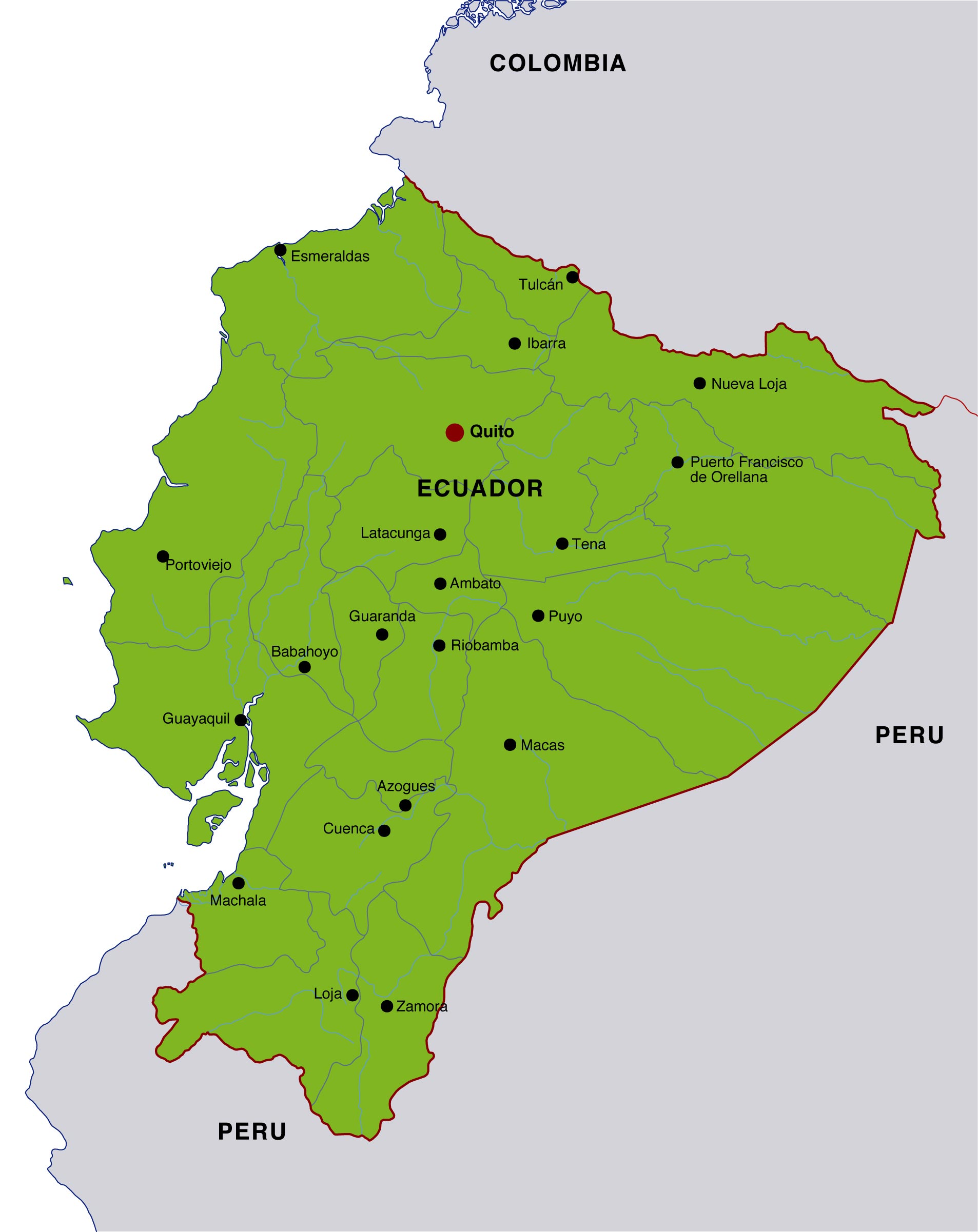
The physical and political map of Ecuador shows two different stories at once: the land itself, with its Andes, coast, Amazon basin, and Galápagos, and the administrative divisions that organize the country into 24 provinces. Together, these maps explain why Ecuador's geography is unusually compact, sharply varied, and politically easy to misread if you only look at borders or only look at terrain.
Why the two maps matter
A physical map of Ecuador reveals elevation, volcanoes, river systems, lowlands, and island geography; a political map shows provinces, capitals, and boundary lines. When you compare them side by side, you can immediately see that the country's most important natural divider is not a border with another nation, but the Andean spine running north to south through the center of the country. That mountain corridor shapes settlement patterns, transport routes, agriculture, and even the way Ecuadorians describe their country regionally.

This is not a small detail. Ecuador covers about 283,561 km2, making it one of South America's smaller mainland states, yet its relief changes from sea level to very high mountain terrain in a short distance. That contrast is the reason a map of Ecuador becomes more informative when it is both physical and political: one map explains nature, the other explains governance.
What the physical map shows
The physical geography of Ecuador is usually divided into four large regions: Costa, Sierra, Oriente, and the Galápagos Islands. The Costa is the western lowland zone along the Pacific; the Sierra is the Andean highlands; the Oriente is the Amazonian east; and the Galápagos form the insular region far offshore. This division is central to understanding climate, biodiversity, economic activity, and population distribution.
- Costa: low-lying Pacific coastal plains, ports, agriculture, and warm tropical conditions.
- Sierra: the Andean highlands, deep valleys, volcanoes, cooler temperatures, and dense historical settlement.
- Oriente: Amazon rainforest, extensive rivers, sparse population, and high ecological value.
- Galápagos: volcanic islands in the Pacific, globally significant for conservation and biodiversity.
The physical map also highlights Ecuador's volcanic landscape. The Andes in Ecuador were formed by long-term tectonic activity linked to plate subduction, and that process continues to shape the land today. The result is a country with peaks, basins, inter-Andean valleys, and active geological systems that matter for roads, farming, urban expansion, and hazard planning.
What the political map shows
The political map of Ecuador organizes the national territory into 24 provinces, each with its own capital and administrative boundaries. This map is essential for reading elections, public services, transport planning, and regional statistics because provinces are the basic units most people use to locate cities and institutions. Quito, the capital of the country, sits in the Sierra, while Guayaquil, the largest city, is in the Costa, which immediately shows how political power and population do not sit in the same place as the country's highest mountains.
| Region | What it represents | Examples | Why it matters |
|---|---|---|---|
| Costa | Western lowlands | Guayaquil, Manabí, Esmeraldas | Ports, trade, agriculture, dense urban networks |
| Sierra | Andean highlands | Quito, Cuenca, Chimborazo zone | Government, historical cities, altitude-driven climate |
| Oriente | Amazon basin | Pastaza, Napo, Sucumbíos | Rainforest, oil infrastructure, low population density |
| Galápagos | Insular province | Santa Cruz, San Cristóbal, Isabela | Conservation, tourism, special governance |
A political map can also show neighboring states, especially Colombia to the north and Peru to the east and south. Those international boundaries matter because Ecuador is a border country with a Pacific frontage, a mountain frontier, and a vast eastern transition into the Amazon system. For readers, the key takeaway is simple: political lines explain administration, but they do not explain the land's physical logic.
How geography shapes life
Ecuador's geography strongly influences where people live, what they grow, and how they move. The Sierra contains many of the country's major historic cities because highland valleys offered more stable settlement conditions, while the Costa supports trade, export agriculture, and major port activity. The Oriente, despite its size, remains far less populated because rainforest terrain and distance from the main transport corridor make large-scale settlement difficult.
The contrast between regions is also visible in climate. A traveler can move through cooler mountain conditions in the Sierra and then reach warmer, wetter lowlands in a relatively short journey. That rapid change is one reason Ecuador is often used in geography classrooms as a compact example of vertical zoning, where altitude alters temperature, vegetation, and human land use.
Historical context
Ecuador's territorial identity was shaped by the Andean corridor, colonial administration, and later republican restructuring. The modern state inherited a geography that tied urban centers to mountain routes while coastal commerce connected the country to the Pacific world. Over time, provincial boundaries and capital cities became the political expression of a land that had already been divided by nature into distinct regions.
The most useful way to read Ecuador is to see its map as a dialogue between mountains and administration.
That idea matters because many people first learn Ecuador as a simple outline on a map, but the country is better understood as a layered system. The Andes explain the landform; the provinces explain the state; the coast, highlands, Amazon, and islands explain everyday life.
Practical reading guide
If you are using an Ecuador map for study, travel, planning, or classroom work, start by identifying the country's four natural regions and then overlay the provincial divisions. That approach makes it much easier to understand why population clusters are uneven and why roads, airports, and major cities appear where they do. It also helps avoid a common mistake: assuming the political map tells you enough without the terrain.
- Find the Andes first, because they organize the country from north to south.
- Locate the Costa, Sierra, Oriente, and Galápagos to understand the major physical regions.
- Check the 24 provinces to see how the state is organized administratively.
- Compare capitals and major cities to the physical landscape around them.
- Use the map to connect climate, settlement, and transport patterns.
This sequence is especially useful for students and travelers because it turns a static map into a working explanation of the country. Ecuador becomes much easier to understand once you see how geography and government overlap without being the same thing.
Key facts
The following facts help anchor the map reading in concrete data. They are also the fastest way to distinguish Ecuador from other Andean countries, especially when scanning a regional atlas or an online map collection.
- Ecuador's area is about 283,561 km2.
- The country is organized into 24 provinces.
- Quito is the capital.
- Guayaquil is the largest city by population.
- The country includes the Galápagos Islands in the Pacific Ocean.
- The Andes divide the mainland from north to south.
- The main natural regions are Costa, Sierra, Oriente, and Galápagos.
Those facts are simple, but together they explain the country's shape, settlement hierarchy, and regional identity. In practice, they are what give a physical-political map its real value.
Why it changes perception
The reason an Ecuador physical-political map is so revealing is that it turns geography into a story of relationships. Mountains are not just scenery, because they determine highways, urban growth, and regional identity; provinces are not just lines, because they organize public life across very different landscapes. Once you read the map this way, Ecuador stops looking like a small country with a neat outline and starts looking like a highly diverse territory compressed into a narrow band of space.
That is the deeper value of the map. It helps explain why Ecuador is simultaneously coastal, Andean, Amazonian, and insular, and why those identities are all visible on one page if the map is read correctly.
Frequently asked questions
Helpful tips and tricks for Ecuador Mapa Fisico Politico Reveals What Most Miss
What is an Ecuador physical map?
An Ecuador physical map shows the country's landforms, including mountains, lowlands, rivers, volcanoes, and islands, rather than administrative borders.
What is an Ecuador political map?
An Ecuador political map shows provinces, capitals, national borders, and major cities, helping readers understand how the country is administratively organized.
How many provinces does Ecuador have?
Ecuador has 24 provinces, and those provinces are the main administrative divisions shown on political maps.
Why is Ecuador's geography so diverse?
Ecuador is diverse because the Andes cut through the center of the country, while the Pacific coast, Amazon basin, and Galápagos add very different natural environments.
Which region is most populated?
The Sierra and Costa contain the country's main population centers, with Quito in the highlands and Guayaquil on the coast.
Why include the Galápagos on the map?
The Galápagos are part of Ecuador's territory and are shown because they are politically Ecuadorian, geographically distinct, and globally important for conservation.