Ecuador Costa Sierra Oriente Galapagos: The Full Map People Forget
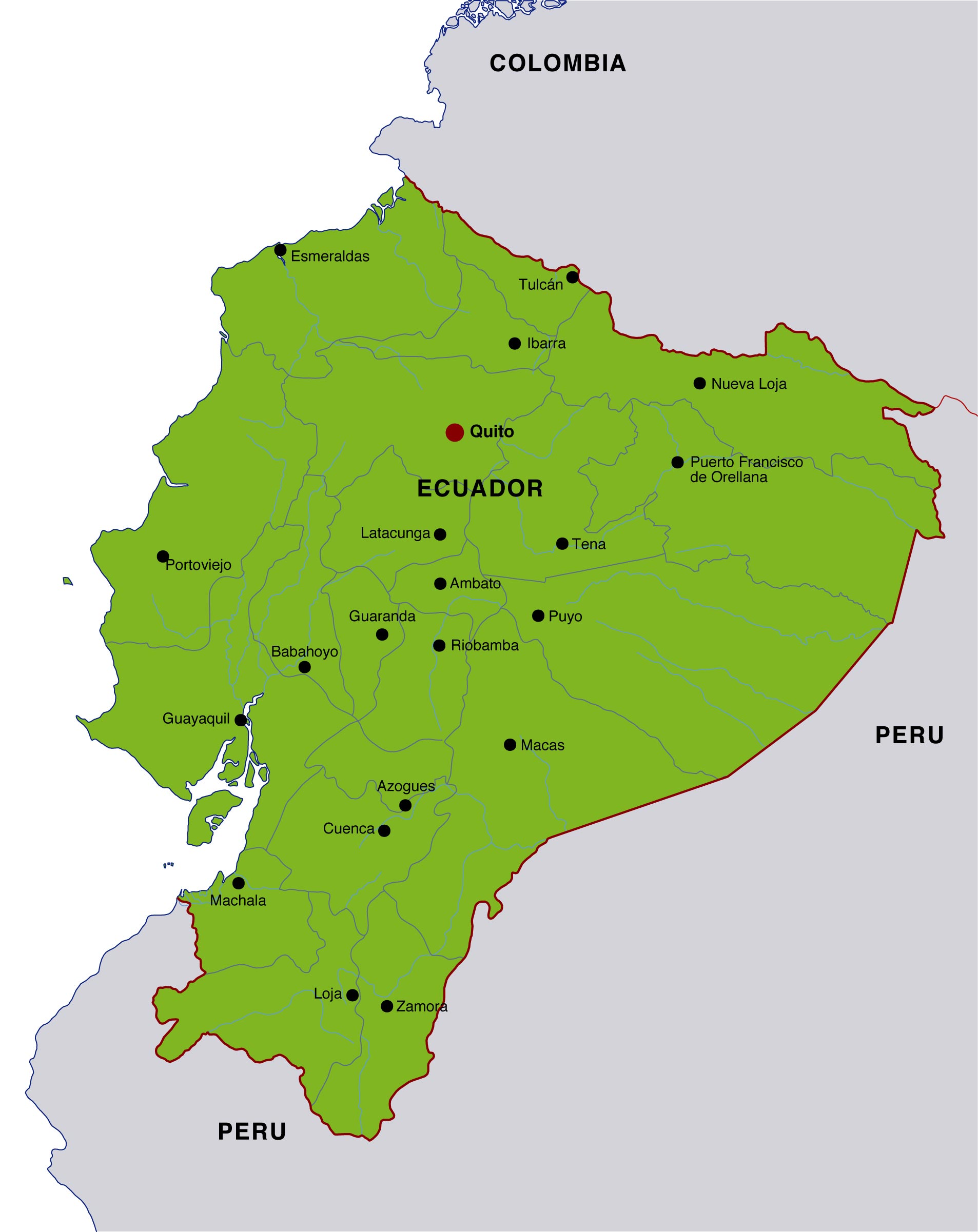
Ecuador's Costa, Sierra, Oriente, and Galápagos are the country's four major geographic regions, and the phrase usually refers to how Ecuador is divided by climate, landscape, culture, and biodiversity rather than to political boundaries. The Costa is the Pacific lowland coast, the Sierra is the Andean highlands, the Oriente is the Amazon basin, and the Galápagos are the volcanic islands off the coast; together, they explain why Ecuador is often described as a country of "four worlds."
What the phrase means
In practical terms, Ecuador regions is a shorthand used by travelers, students, and journalists to describe the country's main ecological zones. The continental mainland is split by the Andes into coast, mountains, and eastern rainforest, while the Galápagos form a fourth insular region with a distinct natural environment. This geographic structure is important because weather, food, transport, and even local identity can change dramatically from one region to another.

Ecuador's territory is relatively compact, covering just under 100,000 square miles, yet it contains a striking range of climates and habitats. The Andes create sharp elevation changes, the Pacific coast is shaped by ocean currents, the Amazon side is humid and rainforest-heavy, and the Galápagos are influenced by both altitude and marine currents. That combination makes Ecuador a useful case study in how geography can organize an entire national identity.
Main regions explained
- Costa: The Pacific coastal belt, known for warm weather, beaches, ports, banana production, cacao, rice, and major commercial centers such as Guayaquil.
- Sierra: The Andean highlands, where altitude shapes the climate, colonial cities and volcanic landscapes dominate, and major destinations include Quito, Cuenca, Baños, Riobamba, and Cotopaxi.
- Oriente: The eastern Amazon region, characterized by rainforest, rivers, indigenous communities, and strong biodiversity values.
- Galápagos: The island region west of the mainland, globally famous for endemic species and its role in natural history.
Regional snapshot
| Region | Landscape | Climate pattern | Well-known places | Core identity |
|---|---|---|---|---|
| Costa | Lowland plains, beaches, mangroves, ports | Warm, humid, ocean-influenced | Guayaquil, Manabí, Esmeraldas, Santa Elena | Agriculture, trade, seafood, coastal culture |
| Sierra | Andes, volcanoes, high valleys | Varies strongly by altitude | Quito, Cuenca, Baños, Cotopaxi, Chimborazo | Colonial heritage, mountain life, volcanic scenery |
| Oriente | Amazon rainforest, rivers, jungle foothills | Hot, wet, relatively uniform | Tena, Puyo, Yasuní, Napo | Rainforest ecology, indigenous cultures, exploration |
| Galápagos | Volcanic islands, marine ecosystems | Ocean-moderated, variable by island and elevation | Santa Cruz, San Cristóbal, Isabela, Fernandina | Evolution, conservation, endemic wildlife |
Why the regions matter
The distinction matters because Ecuador's climate is not organized by season alone but by altitude and ecology. In the Sierra climate, temperature can change quickly as you move up a slope, while on the coast rainfall and ocean patterns have greater influence. In the Oriente, the environment is more consistently humid, and in the Galápagos, sea conditions are often more decisive than latitude.
This regional diversity is one reason Ecuador is so often marketed as a place where travelers can move from one world to another in a single trip. A visitor might begin in a colonial highland city, continue to a rainforest lodge, and finish on a volcanic island chain without leaving the country. That compact variety is one of the strongest features of Ecuador geography.
"Un país de cuatro mundos" captures the way Ecuadorians talk about their country: coast, highlands, Amazon, and islands as one national story with four distinct landscapes.
Historical context
The regional model is not just a travel slogan; it reflects long-standing geographic and cultural realities. The Andes function as a natural divider, helping shape settlement patterns, transport routes, agriculture, and regional identity over centuries. Colonial cities in the highlands developed differently from port cities on the coast, and Amazon communities evolved under very different environmental conditions in the east.
Quito's historic center is widely recognized for its colonial preservation, while Guayaquil emerged as a major commercial and export hub on the coast. In the Amazon, indigenous lifeways and forest-based economies have remained central to regional identity, and the Galápagos later became a global symbol of scientific discovery and conservation. These differences are not superficial; they shape how Ecuadorians understand place, food, accent, work, and local pride.
Travel and culture
For travelers, the four-region framework is a fast way to predict what kind of trip they are planning. The Costa is best for beaches and seafood, the Sierra for mountains and colonial architecture, the Oriente for jungle lodges and wildlife, and the Galápagos for marine life and conservation-focused tourism. That makes regional planning especially useful when building an itinerary around climate, altitude, and transit time.
Culturally, the regions also support different foodways and local customs. Coastal areas are more closely tied to fishing and tropical agriculture, highland areas lean toward cooler-climate staples and Andean traditions, and Amazon communities preserve distinct indigenous traditions and forest knowledge. The Galápagos, by contrast, are less about settlement density and more about environmental stewardship and controlled visitation.
How to use the term
- Use Ecuador Costa Sierra Oriente Galapagos when you want to explain the country's four-region geography in simple terms.
- Use the Spanish names if you are writing for travel, education, or Latin American audiences, because those are the common local terms.
- Use "mainland Ecuador" when you need to distinguish the continental regions from the island region.
- Use "four worlds" when you want a more vivid cultural or tourism-friendly framing.
Common questions
Bottom-line interpretation
When someone says Ecuador Costa Sierra Oriente Galapagos, they are usually asking for the meaning of Ecuador's four-region system and how those regions differ. The shortest accurate answer is that Ecuador is a small country with unusually diverse geography, and those four labels describe its coast, mountains, Amazon, and islands.
That simple framework explains much of Ecuador's climate, culture, tourism appeal, and national identity, which is why it remains one of the most useful ways to understand the country.
What are the most common questions about Ecuador Costa Sierra Oriente Galapagos The Full Map People Forget?
Are Costa, Sierra, Oriente, and Galápagos official provinces?
No. They are geographic and cultural regions, not provinces. Ecuador's provinces sit inside those broader regional groupings, which are used to describe climate, landscape, and identity rather than political administration.
Why is the Sierra so different from the Costa?
The Andes separate the two regions and create major altitude differences, which strongly affect temperature, rainfall, and vegetation. That is why the coast can feel tropical while the highlands remain cool or mild at similar latitudes.
Is the Oriente the same as the Amazon?
Yes, in common usage. The Oriente generally refers to Ecuador's eastern Amazonian region, including rainforest areas, rivers, and lowland jungle ecosystems.
Why are the Galápagos treated as a separate region?
The Galápagos are geographically isolated islands with unique ecosystems, endemic species, and different climate conditions from the mainland. Because of that, they are usually discussed as a fourth region rather than folded into the Costa or any other continental zone.
What is the easiest way to remember the regions?
Think "coast, mountains, jungle, islands." That simple sequence maps cleanly onto Costa, Sierra, Oriente, and Galápagos and captures the basic geography of Ecuador in one line.