Ecuador Climate Map Reveals Wild Regional Contrasts
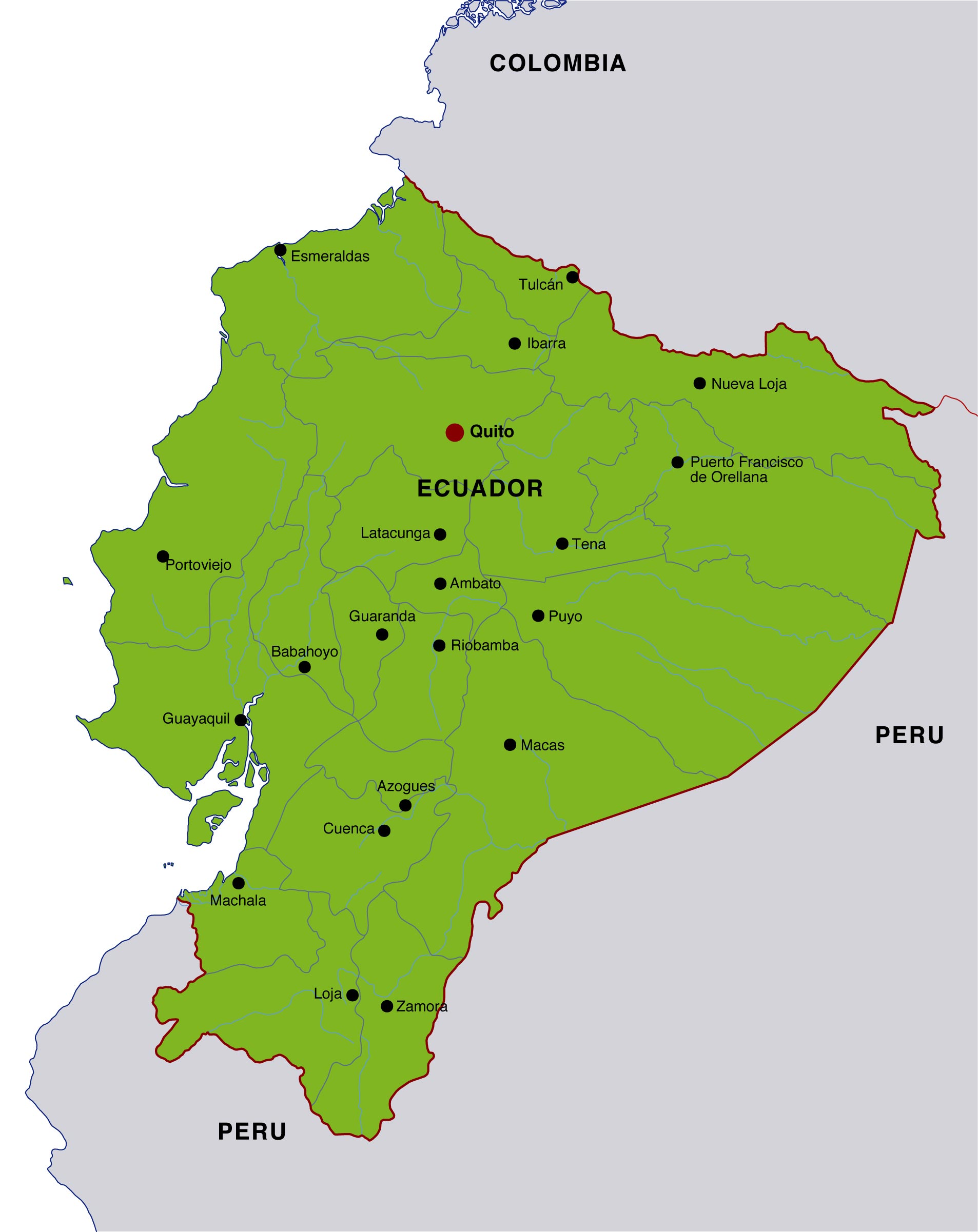
An Ecuador climate map shows a country divided into four sharply contrasting climate zones-Coastal (Costa), Highlands (Sierra), Amazon Basin (Oriente), and Galápagos Islands-each shaped by altitude, ocean currents, and equatorial geography. Despite sitting on the equator, Ecuador's temperatures and rainfall vary dramatically over short distances, ranging from humid tropical heat at sea level to cool alpine conditions above 3,000 meters, making it one of the most climatically diverse nations per square kilometer on Earth.
Geographic Drivers of Climate
The defining factor behind Ecuador's climate map is its extreme topographic variation, especially the Andes mountain range that runs north-south through the country. This range creates rain shadows, temperature gradients, and microclimates that shift within hours of travel. According to Ecuador's National Institute of Meteorology and Hydrology (INAMHI), elevation can change temperatures by roughly 6.5°C per 1,000 meters, meaning Quito (2,850 m) is about 15°C cooler than coastal Guayaquil on average.

The country's climate is also influenced by ocean currents, particularly the Humboldt Current, which brings cooler, drier air to the coast from June to November. Meanwhile, the warm El Niño current periodically disrupts this pattern, causing intense rainfall events-such as the 1997-1998 El Niño, which increased coastal precipitation by over 300% compared to normal levels.
Main Climate Regions
Ecuador is typically divided into four climate zones, each with distinct patterns of rainfall, humidity, and temperature driven by geography and atmospheric circulation.
- Coastal lowlands (Costa): Tropical climate with a wet season (December-May) and dry season (June-November), average temperatures 24-30°C.
- Andean highlands (Sierra): Mild to cool climate year-round, with temperatures ranging 7-22°C depending on altitude; two rainy seasons (March-May and October-November).
- Amazon rainforest (Oriente): Hot, humid, and rainy year-round, with annual rainfall exceeding 3,000 mm in some areas.
- Galápagos Islands: Subtropical climate influenced by ocean currents; warm wet season (January-May) and cooler garúa mist season (June-November).
Each of these zones is clearly visible on a standard regional climate map, often color-coded by precipitation intensity and temperature bands to highlight Ecuador's unique environmental diversity.
Climate Data by Region
The following table presents representative climate averages across Ecuador's main regions, illustrating how sharply conditions differ despite geographic proximity.
| Region | Avg Temperature (°C) | Annual Rainfall (mm) | Elevation Range (m) | Climate Type |
|---|---|---|---|---|
| Coastal (Costa) | 26 | 1,000-2,500 | 0-500 | Tropical wet-dry |
| Highlands (Sierra) | 14 | 500-1,500 | 1,500-4,000 | Temperate highland |
| Amazon (Oriente) | 25 | 2,500-3,500+ | 200-800 | Tropical rainforest |
| Galápagos | 23 | 250-1,000 | Sea level | Subtropical oceanic |
These variations make Ecuador a global case study in microclimate distribution, frequently cited in environmental geography research published by institutions like the World Bank and UNESCO.
How to Read an Ecuador Climate Map
Understanding an Ecuador climate map requires attention to both altitude and rainfall patterns, as these factors interact more strongly here than in most equatorial countries.
- Identify elevation zones: Higher altitudes correspond to cooler temperatures regardless of latitude.
- Check precipitation gradients: Eastern slopes of the Andes receive more rainfall due to moist Amazonian air.
- Note seasonal shifts: Coastal regions change dramatically between wet and dry seasons.
- Look for ocean influence: Coastal and island climates reflect cold or warm current patterns.
- Interpret color coding: Maps often use greens for humid zones and browns for drier regions.
Cartographers often emphasize rainfall intensity zones because precipitation patterns have the greatest impact on agriculture, biodiversity, and infrastructure planning across Ecuador.
Seasonality and Weather Patterns
Although Ecuador lies on the equator, it does not experience traditional four-season cycles; instead, rainfall defines seasonal change. The wet and dry seasons vary by region, with the coast experiencing its heaviest rains from December through May, while the Andes see bimodal rainfall peaks linked to equinox transitions.
In the Amazon region, rainfall is distributed throughout the year, though March to August tends to be wetter. According to INAMHI data from 2023, some Amazonian stations recorded over 300 rainy days annually, underscoring the persistent humidity shown on any detailed precipitation map Ecuador dataset.
Climate Change Trends
Recent climate data indicates measurable shifts in Ecuador's weather patterns, particularly in glacier retreat and rainfall variability. The Antisana glacier, for example, has lost nearly 40% of its ice mass since 1990, according to a 2022 study by Ecuador's Ministry of Environment.
Meanwhile, coastal flooding events linked to stronger El Niño cycles have become more frequent. Scientists project that extreme rainfall events could increase by 20-25% by 2050, altering the patterns seen on future climate risk maps of Ecuador.
Why Ecuador Has So Many Climates
Ecuador's climate diversity stems from the interaction of latitude, altitude, and ocean currents within a compact land area. The country spans just about 256,000 square kilometers, yet contains ecosystems ranging from tropical rainforest to alpine tundra, making it a textbook example of vertical climate zonation.
This phenomenon was first systematically described in the early 19th century by Alexander von Humboldt, who conducted landmark research in Ecuador and demonstrated how altitude replicates the climatic effects of latitude. His observations still underpin modern interpretations of Andean climate systems.
FAQ
Expert answers to Ecuador Climate Map Reveals Wild Regional Contrasts queries
What are the main climate zones in Ecuador?
The main climate zones are the coastal lowlands, Andean highlands, Amazon rainforest, and Galápagos Islands. Each zone has distinct temperature ranges, rainfall patterns, and seasonal cycles influenced by elevation and ocean currents.
Why is Ecuador's climate so varied?
Ecuador's climate varies due to the Andes mountains, which create sharp altitude differences, and ocean currents like the Humboldt Current. These factors produce multiple microclimates within short distances.
What is the coldest region in Ecuador?
The coldest region is the high Andes, where temperatures can drop below freezing at elevations above 4,000 meters, especially at night.
When is the rainy season in Ecuador?
The rainy season depends on the region: coastal areas are wet from December to May, the Andes have two rainy periods (March-May and October-November), and the Amazon experiences rainfall year-round.
How does El Niño affect Ecuador's climate?
El Niño brings warmer ocean temperatures that increase rainfall, especially along the coast, often causing floods and infrastructure damage during strong events.
Is Ecuador hot all year round?
Not everywhere. While lowland regions are consistently warm, highland areas remain cool year-round due to elevation, with mild daytime temperatures and chilly nights.